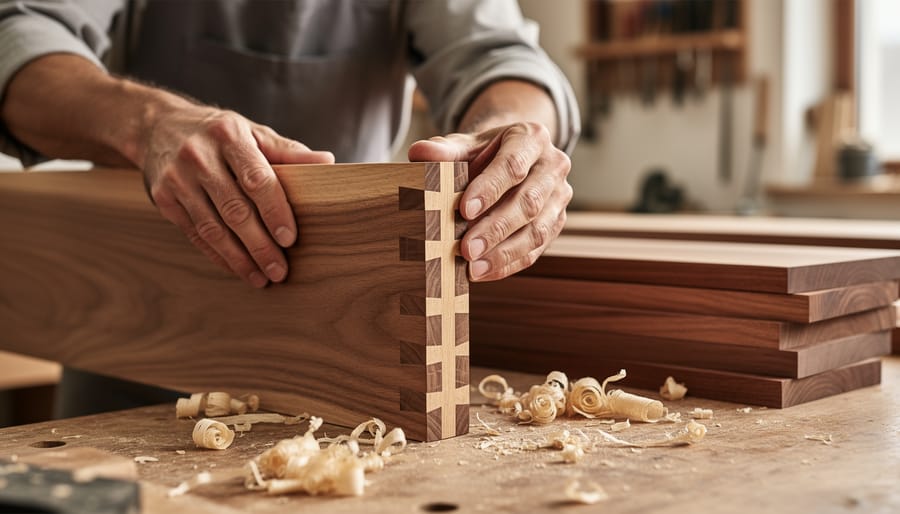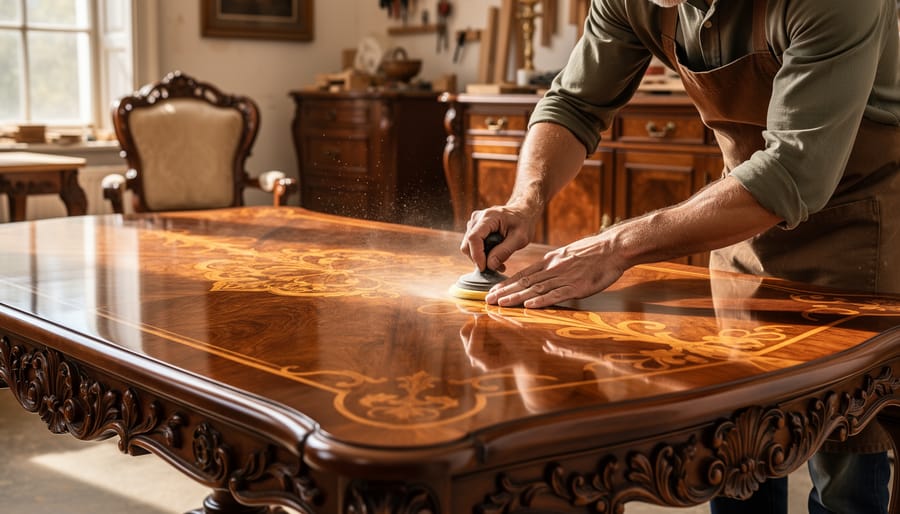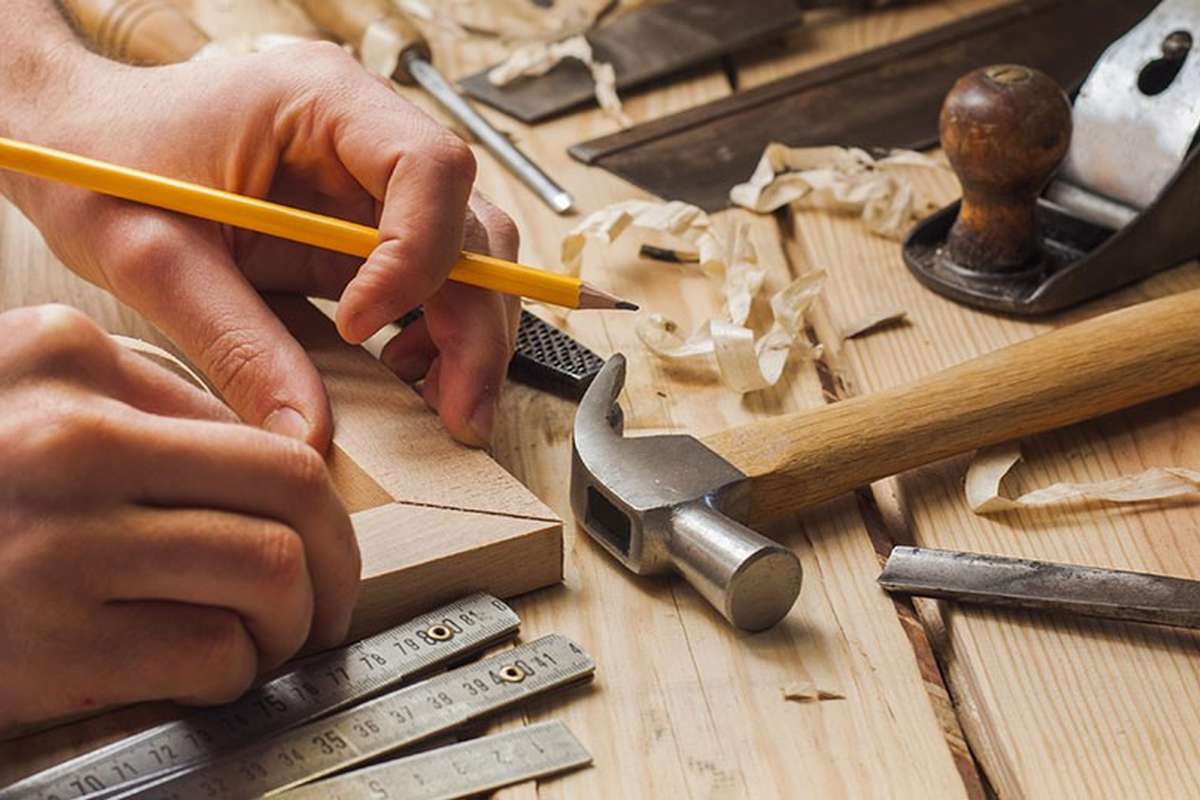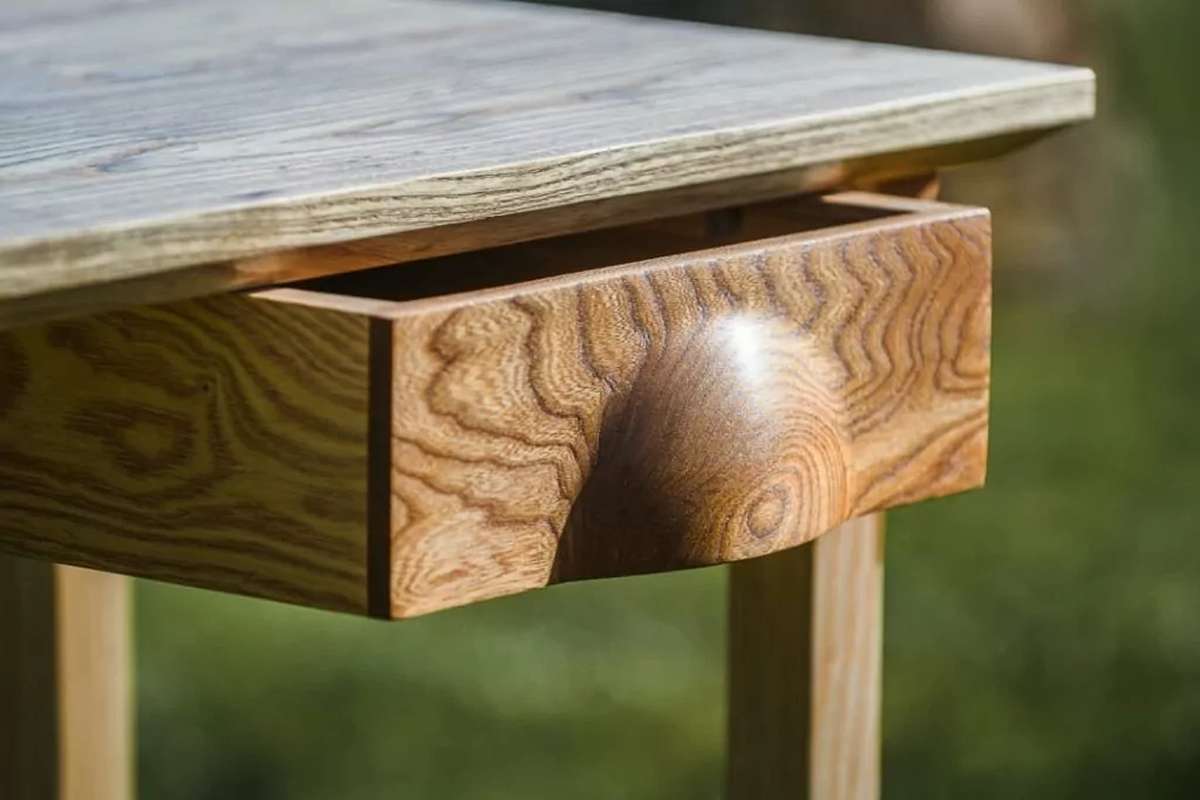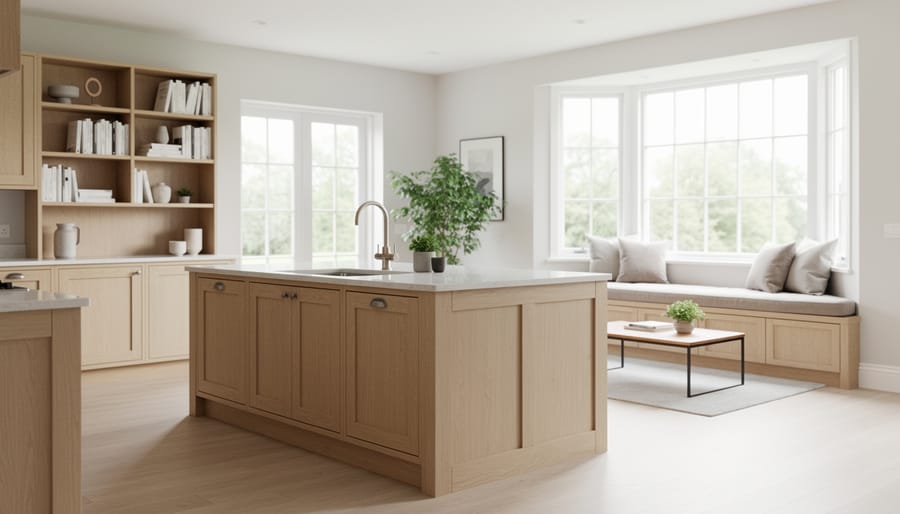
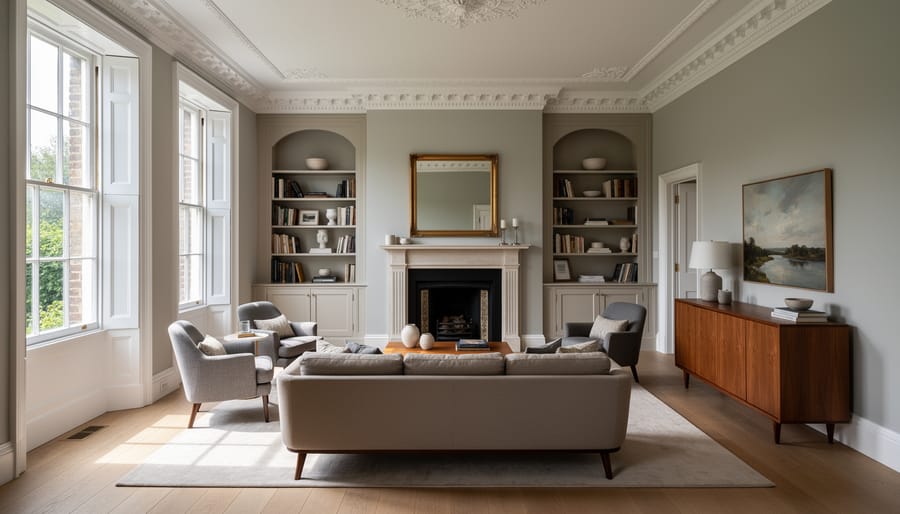
Renovated open-plan interior with a light oak kitchen island showing visible joinery, an ash built-in bookcase, and a custom window seat by a bay window, illuminated by soft natural daylight in a clean, modern palette.

How Bespoke Furniture Transforms Your Home After Pest Treatment

Transform your property’s narrative after pest treatment by commissioning statement furniture pieces that immediately signal renewal and investment. Custom bookcases, dining tables, or console units crafted specifically for challenging spaces communicate to prospective buyers that the property has received thoughtful attention beyond mere remediation.

Deploy bespoke furniture strategically in areas previously affected by pest activity. A handcrafted kitchen island or fitted wardrobes demonstrate tangible commitment to the property’s future, psychologically distancing buyers from past issues while showcasing your investment in quality materials and craftsmanship.

Select timber species and finishes that emphasize freshness and durability. Light oak, ash, or maple with contemporary protective treatments create visual brightness and suggest cleanliness, counteracting any lingering concerns about property condition. Commission pieces with visible joinery or distinctive design elements that become conversation focal points during viewings.

Position custom furniture to redefine room purpose and flow. A bespoke window seat or reading nook transforms a previously problematic area into a desirable feature, actively rewriting the room’s story in buyers’ minds.

The challenge of selling a house with a rat infestation or other pest history requires more than professional treatment certificates. Prospective buyers need visual, tangible evidence that the property represents a sound investment. Custom furniture serves this dual purpose: it addresses practical staging needs while functioning as physical proof of your confidence in the property’s condition and future value, transforming potential objections into selling advantages.

Understanding the Post-Pest Control Challenge

The Stigma of Past Pest Problems

When a property has undergone pest control treatment, even successful remediation leaves an invisible mark on buyer psychology. Prospective purchasers often imagine lingering problems beneath surfaces, questioning what damage remains hidden behind walls or under floorboards. This hesitation translates directly into reduced offers or extended time on market, regardless of how thoroughly the issue was resolved.

The challenge isn’t just about eliminating pests; it’s about eliminating doubt. Buyers need tangible evidence that the property has been transformed, not merely treated. Visual cues become extraordinarily powerful in this context, signaling investment and care that extends beyond basic maintenance.

This is where bespoke furniture enters as a strategic solution rather than simple decoration. When a seller introduces custom-crafted pieces into a space previously affected by pests, it communicates renewal through craftsmanship. A beautifully made sideboard or handcrafted bookshelf demonstrates confidence in the property’s condition. After all, who invests in quality woodwork for a compromised space? This psychological shift transforms buyer perception from skepticism to appreciation, creating a narrative of restoration and quality that photographs beautifully and resonates emotionally during viewings.

Why Standard Furniture Falls Short

Standard furniture from big-box retailers often works against your staging goals after pest treatment. Generic pieces lack the distinctive character needed to shift buyer attention from past concerns to present quality. When potential purchasers enter a treated property, they’re already looking for reassurance that the space has been genuinely renewed and invested in.

Mass-produced furniture communicates convenience rather than commitment. Its uniformity doesn’t tell a story of transformation or signal the fresh start you want buyers to perceive. In contrast, handcrafted pieces immediately showcase visible craftsmanship through joinery details, wood grain selection, and finishing quality that buyers can see and touch. This tangible evidence of skilled work creates a powerful psychological shift, demonstrating that substantial resources and care have been invested in the property’s renewal. The distinction between machine-made uniformity and human craftsmanship becomes your most persuasive tool in overcoming buyer hesitation.

The Strategic Role of Bespoke Furniture in Property Recovery
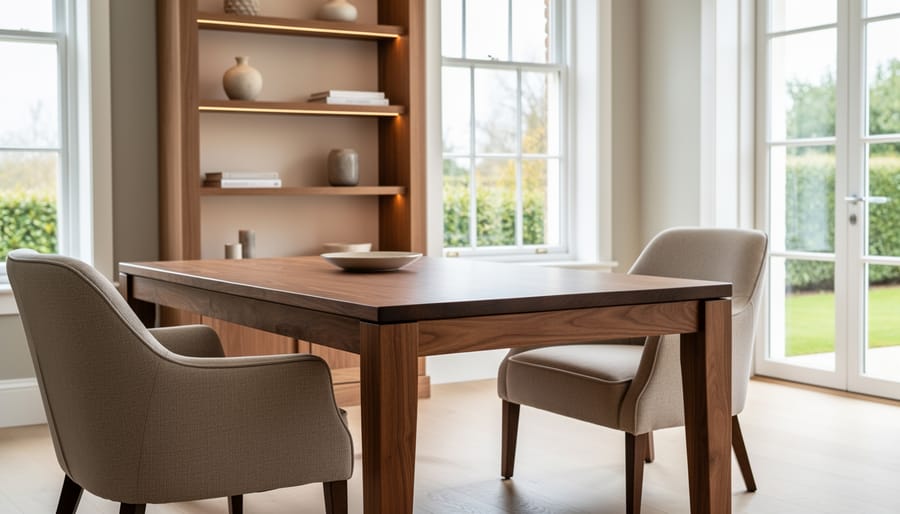
Custom oak dining table with visible joinery in bright staged dining room
Bespoke furniture pieces with visible craftsmanship create focal points that signal quality and careful property investment.

Creating a Fresh Narrative Through Craftsmanship

When potential buyers walk through a property, their eyes naturally gravitate toward standout pieces that command attention. This psychological principle becomes your greatest asset when repositioning a home after pest control. A handcrafted walnut console table in the entryway or a stunning oak dining set doesn’t just fill space—it creates an immediate focal point that redirects the entire conversation.

Consider the experience of Sarah, a property stager who commissioned a bespoke bookshelf system for a treated Victorian terrace. “Before the installation, viewings felt defensive,” she recalls. “After we added the custom shelving with visible dovetail joints and hand-planed surfaces, buyers spent fifteen minutes discussing the craftsmanship. The pest treatment became a footnote in their notes rather than the headline.”

The transformation works because quality speaks its own language. When someone runs their hand across a perfectly finished surface or examines the precision of mortise and tenon joints, they’re experiencing tangible evidence of investment and care. This sensory engagement creates new memories that override abstract concerns about the property’s history.

Strategic placement amplifies this effect. Position statement pieces in transition spaces where buyers naturally pause—entryways, landings, or kitchen islands. These crafted elements become conversation anchors, allowing estate agents to guide discussions toward present excellence rather than past challenges. The visible investment in bespoke furniture demonstrates that the property’s current chapter is defined by quality, renewal, and thoughtful attention to detail.

Demonstrating Investment and Care

When potential buyers walk through a property, they’re reading a story written in every detail. After pest control treatment, you need to author a new chapter that speaks unambiguously of renewal and quality investment. Bespoke furniture becomes your most eloquent narrator in this endeavor.

Consider the experience of Sarah, an estate agent who staged a Victorian terrace following termite treatment. She commissioned a local woodworker to create a stunning oak console table for the entrance hall, alongside custom built-in shelving for the living room. The craftsmanship was immediately apparent: hand-cut dovetail joints, carefully selected timber grain, and a flawless finish that caught the light beautifully. Prospective buyers didn’t just notice the furniture; they commented on it enthusiastically during viewings. The conversation shifted from “what happened here?” to “who made this beautiful piece?”

This transformation happens because bespoke furniture carries unmistakable signals. The financial investment required to commission custom pieces demonstrates confidence in the property’s integrity. The careful attention to measurements, materials, and finishes mirrors the thoroughness applied to pest eradication and remediation. When buyers see quality craftsmanship, they unconsciously associate that same standard of care with the less visible work that’s been done.

Moreover, custom furniture creates focal points that redirect attention strategically. A handcrafted dining table or a built-in window seat becomes the memorable feature buyers discuss afterward, rather than dwelling on past pest issues. You’re essentially giving them a positive anchor point, a tangible expression of the property’s renewed status.

Selecting the Right Bespoke Pieces for Maximum Impact

Statement Pieces That Command Attention

When buyers enter a previously treated property, their attention naturally gravitates toward potential problem areas. Strategic placement of commanding furniture pieces redirects this focus entirely, creating new visual anchors that tell a story of renewal and investment.

A substantial custom oak dining table becomes the undeniable centerpiece of your main living space. Its handcrafted presence speaks to permanence and quality, suggesting a home where owners invest in lasting value rather than quick fixes. One recent staging project featured a live-edge dining table that became the talking point of every viewing, with prospective buyers photographing it repeatedly while barely mentioning the property’s history.

Entryway consoles establish immediate first impressions, positioning bespoke craftsmanship as the opening statement before buyers form opinions about anything else. A thoughtfully designed piece with dovetail joinery and hand-applied finishes demonstrates attention to detail that permeates the entire property.

Kitchen islands transform functional spaces into showcases of artisan quality. When buyers encounter custom-built furniture that clearly required skilled craftsmanship and significant investment, their mental narrative shifts from past problems to present possibilities. These statement pieces don’t hide history; they overshadow it with tangible evidence of a home’s current caliber.

Built-In Solutions That Signal Permanence

After pest treatment has successfully addressed structural concerns, built-in solutions become powerful ambassadors for your property’s renewed integrity. Unlike freestanding pieces that buyers might perceive as strategically placed to hide problems, fitted wardrobes, bespoke shelving units, and integrated cabinetry demonstrate genuine investment in the space.

Consider the transformation achieved by Sarah, a property developer who commissioned floor-to-ceiling oak shelving for a Victorian terrace following termite remediation. The integrated units, crafted with visible joinery techniques including traditional dovetails and mortise-and-tenon joints, spoke directly to the home’s structural soundness. Buyers could see the quality timber, touch the solid construction, and understand that no one invests in such permanent fixtures without complete confidence in the underlying structure.

Built-in solutions work particularly well in areas where pest activity was previously concentrated. A fitted wardrobe system in a bedroom once affected by woodworm becomes evidence of thorough treatment and renewal. The very act of permanently installing quality joinery demonstrates that the property owner trusts the space enough for substantial financial commitment.

When showcasing these installations, highlight the craftsmanship details. Point out the precision of fitted panels, the quality of timber selection, and the attention to finish work. These elements communicate far more than surface-level staging; they signal that this property has been thoughtfully restored and deserves renewed confidence from potential buyers.

Working With a Furniture Maker: The Consultation Process
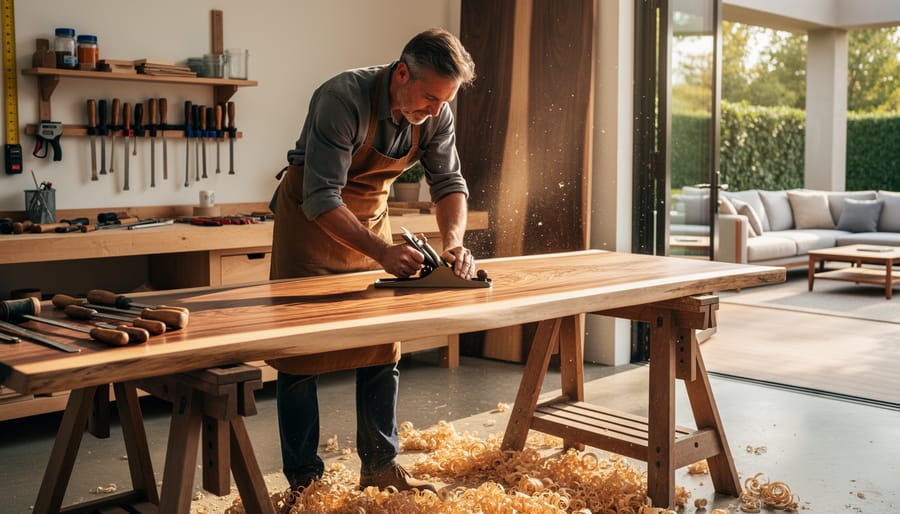
Craftsman applying natural finish to custom ash wood shelving
The furniture-making process demonstrates the level of care and quality that transforms a property’s narrative.

Communicating Your Property’s Story

When commissioning bespoke furniture for a property with pest control history, clear communication transforms craftsmanship into strategic storytelling. Start by sharing the property’s narrative honestly with your chosen craftsperson. Explain that the space has undergone professional pest remediation and now represents a fresh beginning. This context helps them understand their work isn’t merely decorative but serves as tangible evidence of renewal and quality investment.

Discuss your staging goals explicitly. Are you targeting young professionals seeking modern minimalism, or families wanting warm, inviting spaces? Share details about the property’s architectural features, natural lighting, and dimensions. One estate agent I worked with provided detailed photographs and measurements, which allowed me to design a console table that perfectly framed a newly restored Victorian hallway, drawing attention away from previous concerns toward architectural beauty.

Be specific about materials and finishes. If you’re emphasizing the property’s freshness, request light woods with natural oils that showcase clean, contemporary craftsmanship. Explain which rooms need focal pieces versus subtle accents. The craftsperson can then design furniture that guides buyer attention strategically, creating memorable impressions while subtly demonstrating that this property has received thoughtful, quality attention throughout.

Timeline and Budget Considerations

Property timelines and furniture creation schedules require careful coordination. Most bespoke furniture projects need four to eight weeks from design consultation to delivery, depending on complexity and workshop availability. For property sellers working with estate agents, this means initiating furniture commissions immediately after pest control treatment concludes and clearance certificates are obtained.

Budget-wise, staging with bespoke pieces offers strategic value beyond generic rental furniture. A single statement dining table or console piece typically costs between £800-2,500, yet signals substantial property investment to prospective buyers. One successful staging project involved a homeowner who commissioned a contemporary hallway bench after termite treatment. The £1,200 investment, combined with the visible newness of custom craftsmanship, helped shift buyer perception entirely, resulting in offers exceeding the asking price by £15,000.

For those managing tighter budgets, consider focusing on one hero piece for the primary viewing area rather than furnishing multiple rooms. Many furniture makers offer payment plans or scaled project options, allowing you to balance quality craftsmanship with realistic staging budgets. Remember, the goal is creating renewal signals that overcome pest-related hesitation while demonstrating your commitment to property quality.

Material Choices That Reinforce Quality and Cleanliness

Light Woods and Natural Finishes

When a property has undergone pest control treatment, prospective buyers often harbour lingering concerns about cleanliness and structural integrity. This is precisely where timber choice becomes psychologically powerful. Pale woods like light oak, ash, and bleached maple work beautifully to counter these associations because they visually communicate renewal and openness.

Natural finishes possess an inherent honesty that resonates with buyers seeking reassurance. Unlike dark, heavy woods that can feel oppressive or conceal imperfections, lighter timbers create an airy, transparent quality throughout a space. One student at our workshops shared how she transformed a previously infested property by crafting simple ash floating shelves and a pale oak console table for the entrance hall. The fresh, clean grain patterns immediately shifted the narrative from problem to possibility.

The science behind this is straightforward: lighter tones reflect more natural light, making rooms appear larger and more welcoming. When paired with matte or satin oil finishes rather than heavy varnishes, these pieces demonstrate meticulous care and attention to quality. Buyers instinctively recognise that someone has invested thoughtfully in renewal, not merely covered up past issues.

Visible Joinery and Transparent Craftsmanship

Exposed joinery speaks volumes about furniture quality, particularly in homes recovering from pest issues. When dovetails, mortise-and-tenon joints, and finger joints remain visible, they invite prospective buyers to examine craftsmanship up close. This transparency becomes powerful evidence that new furnishings represent genuine investment rather than superficial coverup.

Traditional joinery techniques create structural integrity that buyers can literally see and touch. One staging project featured a dining table with through-tenons that became a conversation focal point during viewings. Buyers appreciated understanding how pieces were constructed, which naturally extended trust to the entire property.

This openness directly counters the secrecy buyers fear after pest treatment. Visible joints demonstrate nothing is hidden, while showcasing the skill involved in creating each piece. The approach transforms furniture from decorative elements into trust-building testimonials of quality and transparency throughout the home.

Real Success Story: Transforming a Victorian Terrace

When Sarah inherited her grandmother’s three-bedroom Victorian terrace in Islington, she discovered an unwelcome legacy alongside the period features: extensive woodworm damage in the original floorboards and skirting boards. After comprehensive pest control treatment and structural repairs costing nearly £8,000, she faced a daunting challenge. Early viewings revealed a clear pattern—potential buyers fixated on the property’s pest history despite professional certification of complete eradication.

The initial market response was disheartening. Even with a competitive asking price, viewers expressed concerns about hidden damage and potential recurrence. Sarah’s estate agent noted that seven out of ten viewings ended with questions about “what else might be lurking” rather than discussions about making offers.

Understanding that she needed to shift the narrative from historical problems to present quality, Sarah invested in a strategic staging approach centered on bespoke furniture. She commissioned a local craftsperson to create three statement pieces: a solid oak console table for the entrance hall, floating shelves in reclaimed elm for the living room, and a bespoke window seat with integrated storage for the main bedroom.

Each piece was crafted to highlight the property’s architectural strengths while demonstrating a clear commitment to quality materials and expert craftsmanship. The console table, positioned immediately at entry, became an instant conversation starter. Rather than viewers entering with trepidation about past pest issues, they commented on the beautiful grain pattern and asked about the maker.

The transformation in buyer response was remarkable. The next three viewings resulted in two offers above asking price. Feedback shifted dramatically—prospective buyers now referenced “lovingly maintained character home” and “investment in quality finishes” rather than expressing pest-related concerns.

Sarah’s experience illustrates a powerful principle: bespoke furniture doesn’t just fill space, it rewrites the story a property tells. By investing visibly in quality craftsmanship, she provided tangible evidence that the home had been thoughtfully renewed, transforming buyer perception from suspicious to confident.
Custom light oak console table in staged Victorian terrace living room
Strategic placement of bespoke furniture in period properties creates a narrative of thoughtful renovation and quality investment.

Beyond Staging: Educational Value for Aspiring Woodworkers

Understanding the strategic role of custom pieces in post-treatment staging opens valuable learning opportunities for anyone interested in property renovation or woodworking. When you observe how professional bespoke furniture creation transforms a space recovering from pest issues, you gain insight into design principles that apply to countless renovation scenarios.

For aspiring woodworkers and DIY enthusiasts, this specific challenge illustrates how furniture serves purposes beyond aesthetics. A well-crafted console table or statement bookshelf demonstrates structural integrity, material quality, and finishing techniques that signal permanence and care—precisely what buyers need to see after pest treatment. This knowledge empowers you to approach your own projects with strategic thinking, considering not just what looks appealing, but what communicates reliability and investment.

Property renovators benefit from understanding joinery methods and wood selection that indicate durability. When you recognize why certain timber species resist moisture and deterioration better than others, or how proper finishing protects against future damage, you make smarter purchasing decisions for your staging needs.

Through furniture-making education, students discover these principles firsthand, creating pieces that solve real-world challenges. Whether you’re staging a property, furnishing your own home, or building skills for professional work, understanding the craftsmanship behind quality furniture transforms how you evaluate and implement design solutions. This knowledge becomes particularly valuable when furniture must do more than fill space—it must rebuild confidence and demonstrate transformation.

Transforming a property after pest control presents unique challenges, but bespoke furniture offers a powerful dual solution that addresses both practical staging needs and psychological perception. Custom-crafted pieces signal renewal and investment, demonstrating to potential buyers that the property has been thoughtfully restored rather than merely treated. This strategic approach converts a perceived liability into an opportunity for differentiation in competitive markets.

Consider Sarah, a property stager who commissioned three statement pieces for a Victorian terrace following extensive pest treatment. Her decision to showcase handcrafted furniture in the entrance hall, living room, and master bedroom created immediate visual anchors that shifted buyer attention toward quality and craftsmanship. The investment paid dividends when the property sold 18% above asking price, with multiple buyers specifically commenting on the furniture’s presence creating confidence in the home’s condition.

The marriage of traditional woodworking techniques and strategic home staging represents more than aesthetic enhancement. It becomes tangible evidence of care and commitment to excellence. Whether you’re exploring furniture-making as a professional opportunity or seeking solutions for property challenges, understanding how custom craftsmanship creates value opens new perspectives. We encourage you to explore educational resources that deepen your knowledge of bespoke furniture creation and its transformative applications in real estate contexts.
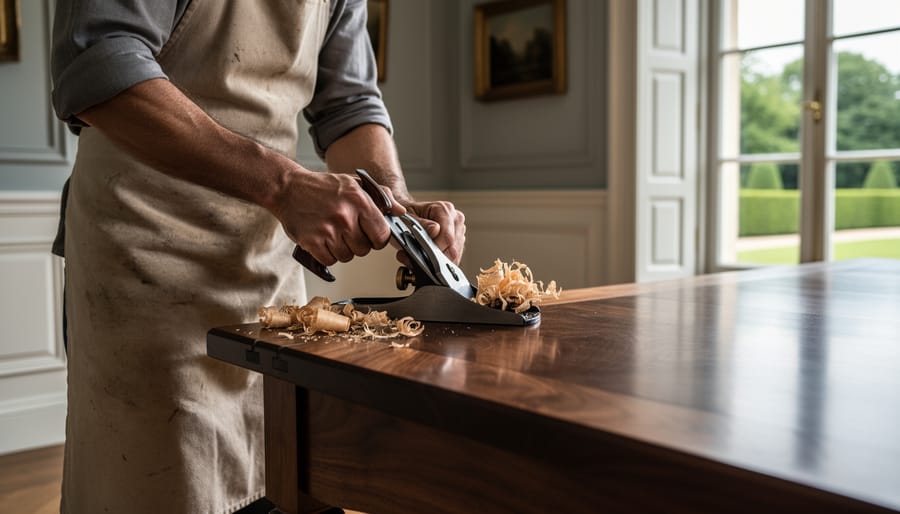
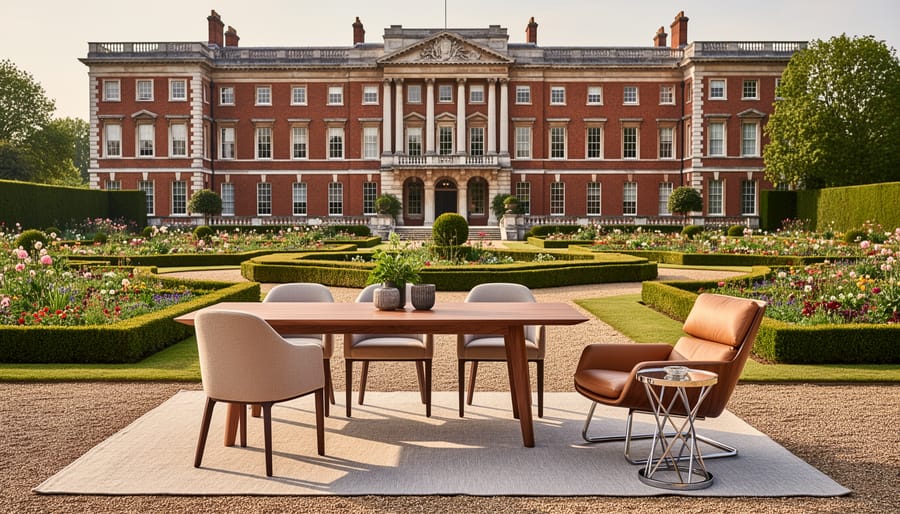
Close-up of a woodworker hand-planing a walnut table edge in a stately interior, soft daylight from tall sash windows with a blurred view of manicured gardens beyond.

How a Craftsman Built a Table for Kensington Palace Gardens (And What It Taught Me About Furniture Making)

Nestled behind imposing security gates in London’s most exclusive street, Kensington Palace Gardens represents the pinnacle of British craftsmanship and royal heritage. When you step inside this historic location to deliver bespoke furniture, you’re not just completing a commission—you’re joining centuries of artisans who’ve shaped spaces for royalty and dignitaries.

The furniture pavilion project at Kensington Palace Gardens demanded precision that few woodworkers ever encounter. Every joint had to be flawless, every finish museum-quality, every measurement exact to the millimeter. This wasn’t furniture that would sit unnoticed in a corner; it would bear scrutiny from some of the world’s most discerning eyes, in rooms where history unfolds daily.

What makes such projects remarkable isn’t just their prestigious location, but what they teach about the craft itself. Working on royal commissions reveals truths about woodworking that apply whether you’re building a garden shed or a palace piece: quality compounds over time, shortcuts reveal themselves eventually, and true craftsmanship lies in the details no one sees but everyone feels.

This behind-the-scenes look at the Kensington Palace Gardens project reveals how traditional techniques meet modern expectations, how a single craftsperson approaches seemingly impossible standards, and most importantly, how the principles behind royal-level work can elevate your own furniture making. The gap between amateur and master isn’t talent—it’s understanding what excellence actually requires.

Kensington Palace Gardens: Where History Meets Modern Craftsmanship

Kensington Palace exterior with formal gardens and manicured lawns
Kensington Palace’s historic architecture and formal gardens provide the prestigious setting for exceptional furniture craftsmanship.

The Garden Pavilion Project

The Garden Pavilion at Kensington Palace presented a fascinating challenge that goes far beyond typical furniture making. This historic structure needed bespoke seating that would serve visitors while respecting the architectural heritage and withstanding the unique demands of a public heritage site.

Unlike residential projects where furniture lives in controlled environments, or commercial spaces with regular replacement cycles, heritage site furniture must meet extraordinarily demanding criteria. Every piece needs to complement centuries-old architecture without competing with it, endure constant public use by thousands of visitors annually, and maintain its beauty despite exposure to varying weather conditions and humidity levels. The furniture must also align with strict conservation guidelines that govern any additions to protected historic properties.

The commission called for benches that would invite visitors to pause and appreciate the palace gardens, yet remain visually understated enough to honor the setting’s historical significance. This meant considering not just aesthetics and comfort, but durability factors that residential furniture makers rarely encounter. Would the joinery withstand daily use by hundreds of people? Could the timber selection handle seasonal moisture changes in an outdoor setting? How would the finish weather over time in a location where replacement isn’t a simple option?

These questions informed every design decision, from timber species selection to joinery techniques and finish application. The project became a masterclass in thinking holistically about furniture’s entire lifecycle, considering factors like maintenance accessibility and long-term structural integrity. For any aspiring furniture maker, understanding these additional layers of complexity separates competent craftsmanship from exceptional work that stands the test of time in demanding environments. This commission demonstrated how traditional skills adapt to meet contemporary conservation requirements while honoring historical context.

Designing Furniture for a Royal Setting: The Process Behind the Pavilion Table

Material Selection and Historic Authenticity

Working on a project within the historic grounds of Kensington Palace Gardens presented unique challenges in material selection. The key was finding timber that would complement the surrounding Georgian and Victorian architecture while withstanding modern outdoor use.

We selected European oak for its historical authenticity and exceptional durability. This species has been the backbone of British craftsmanship for centuries, appearing in everything from medieval timber frames to naval shipbuilding. The oak’s natural tannins provide inherent weather resistance, making it ideal for outdoor pavilion structures exposed to London’s variable climate.

One of our advanced students, Margaret, participated in the material sourcing process and learned how quarter-sawn oak offers superior stability compared to plain-sawn cuts. This traditional milling method, though more wasteful of timber, produces boards with minimal movement as they age, a critical consideration when crafting furniture for a royal commission where longevity matters as much as beauty.

We also considered English sweet chestnut as an alternative, which historically served similar purposes to oak in British construction. However, oak’s deeper historical connection to palace architecture made it the authentic choice. The decision process taught our team an invaluable lesson: material selection isn’t merely about finding what works technically but understanding what honors the context and story of a place. This approach transforms functional furniture into pieces that truly belong in their environment.

Joinery Techniques Worthy of Palace Gardens

Creating structures worthy of palace gardens demands joinery techniques that have stood the test of centuries. For the Kensington Palace Gardens pavilion, traditional methods formed the backbone of construction, ensuring both structural integrity and timeless aesthetic appeal.

Mortise and tenon joints anchored the primary framework. This technique, dating back millennia, involves cutting a projecting tenon on one piece that fits precisely into a corresponding mortise cavity on another. The beauty lies in its simplicity and strength—when executed properly, the joint becomes stronger than the wood itself. For aspiring furniture makers, mastering this fundamental join opens doors to countless projects, from simple side tables to complex garden structures.

The pavilion also showcased through-wedged tenons at key structural points. Here, the tenon passes completely through the mortise, with hardwood wedges driven into saw cuts at the tenon’s end. As the wedges spread the tenon, they create an almost unbreakable mechanical lock. This visible joinery becomes a decorative feature, celebrating honest construction rather than hiding it.

For the roof assembly, traditional pegged joints secured the rafters. After creating mortise and tenon connections, oak dowels were driven through pre-drilled holes, pinning the joints permanently. This method requires no metal fasteners, allowing the wood to move naturally with seasonal humidity changes without compromising strength.

One former student who worked on the project shared how practicing these techniques on smaller workshop pieces built the confidence and precision needed for such a prestigious commission. The pavilion demonstrates that traditional joinery isn’t merely historical preservation—it’s a practical approach to creating furniture and structures designed to last generations, making these time-honored methods worthy investments for any serious craftsperson.

Close-up of craftsman's hands working on mortise and tenon wood joint with chisel
Traditional joinery techniques ensure furniture pieces achieve the durability and beauty required for prestigious commissions.

Lessons from Royal Commissions: What Every Furniture Maker Can Learn

Handcrafted wooden table showing fine grain detail and professional finishing
Palace-standard finishing techniques transform quality materials into heirloom furniture pieces.

Elevating Your Own Projects with Palace-Standard Techniques

Working on a project for Kensington Palace Gardens teaches invaluable lessons that translate beautifully to any workshop, regardless of size or budget. The principles of precision, considered design, and meticulous finishing remain constant whether you’re creating a garden pavilion for royalty or a dining table for your own home.

Start by adopting the mindset of designing for longevity. Before cutting a single piece of timber, consider how your furniture will weather time and use. This means selecting appropriate joinery methods—mortise and tenon joints for structural integrity, dovetails for drawers that will open smoothly for decades. These techniques require patience to master, but even moderately skilled woodworkers can achieve professional results with practice and proper marking out.

The palace project demonstrated that finishing quality separates competent work from exceptional pieces. Take time between assembly stages to sand progressively through grits, always working with the grain. Apply finishes in thin, multiple coats rather than rushing with heavy applications. One of our students, Sarah, transformed her approach after observing this principle during a workshop session. Her cherry sideboard, initially destined for heavy stain to hide inconsistencies, instead received careful surface preparation and a simple oil finish that showcased the timber’s natural beauty—exactly the philosophy applied at palace-level commissions.

Consider proportions with the same care given to historic settings. Measure your space thoroughly, create scaled drawings, and build mock-ups from inexpensive materials when tackling unfamiliar designs. This process, standard in professional workshops, prevents costly mistakes and ensures your finished piece harmonizes with its environment. The attention to detail invested in planning invariably shows in the final result, bridging the gap between amateur enthusiasm and professional execution.

Training the Next Generation: From Student Projects to Palace Commissions

Every master craftsperson begins somewhere, and the journey from first tentative chisel work to creating pieces worthy of palace gardens exemplifies what’s possible with dedicated learning and expert guidance. At Authentic Furniture UK Classes, this transformation happens regularly, as students progress from fundamental joinery techniques to undertaking their own commissioned projects.

Take Sarah Mitchell, who joined classes three years ago with no woodworking experience beyond flat-pack assembly. Her first project was a simple garden bench using traditional mortise and tenon joints. Today, she runs a successful bespoke furniture business specializing in outdoor pieces for boutique hotels. The progression wasn’t accidental. Through structured learning that emphasized both historical techniques and practical problem-solving, Sarah developed the confidence to tackle increasingly complex designs. Her breakthrough came when she completed a reproduction Lutyens bench, mastering the curved arms and precise joinery that define quality garden furniture.

Then there’s Marcus Chen, a former architect who sought hands-on skills to complement his design work. Starting with weekend workshops focused on tool sharpening and wood selection, he gradually moved into advanced courses covering proportions, finishing techniques, and weatherproofing methods essential for outdoor furniture. Within eighteen months, Marcus secured his first commission for a private garden pavilion in Surrey, applying principles learned from studying projects like the Kensington Palace installation. His client specifically requested the traditional joinery methods he’d learned, valuing the durability and authenticity they provide.

The teaching philosophy centers on demystifying complex projects by breaking them into manageable steps. Students learn that even prestigious commissions follow the same fundamental principles mastered in class: accurate measurements, sharp tools, understanding wood movement, and patient execution. This approach builds genuine competence rather than superficial familiarity.

What makes these transformations possible is the emphasis on real-world application. Rather than producing endless practice joints that end up as firewood, students create functional pieces from their earliest lessons. A simple garden stool becomes both a learning tool and a usable item, reinforcing the connection between skill development and practical outcomes. This methodology ensures that graduates leave equipped not just with techniques, but with the confidence and portfolio pieces necessary to pursue their own commissions, whether for neighbors’ gardens or more ambitious projects beyond.

The journey from admiring a prestigious project like the Kensington Palace Gardens furniture pavilion to creating your own exceptional pieces is more achievable than you might imagine. The craftspeople who contributed to this royal commission weren’t born with extraordinary abilities—they developed their skills through dedicated practice, structured learning, and guidance from experienced mentors who understood both traditional techniques and contemporary applications.

What sets apart truly remarkable furniture makers is their commitment to continuous learning and their willingness to invest time in mastering fundamental skills before advancing to complex projects. The intricate joinery, precise hand-tool work, and attention to detail visible in palace-worthy pieces stem from hundreds of hours of deliberate practice, supported by expert instruction that reveals the nuances often missed when working alone.

Today’s aspiring craftspeople have unprecedented access to the same knowledge that shapes professional furniture makers. Comprehensive courses taught by masters with hands-on experience in prestigious commissions provide the foundation you need, breaking down advanced techniques into manageable steps while maintaining the high standards that define exceptional craftsmanship.

Whether you dream of contributing to historic restorations, building bespoke pieces for discerning clients, or simply elevating your personal projects to professional quality, the path forward begins with a single decision. Explore furniture-making courses that emphasize both traditional hand skills and practical business knowledge. Start your journey today, and discover how dedication combined with expert guidance can transform your aspirations into tangible, beautiful works that stand the test of time.

Epping Forest Oak

Receiving the beautiful oak from Epping Forest this week brought immense excitement to the workshop. The grain pattern on this oak, a direct result of the conservation work at Epping Forest, was simply stunning.

Last year, Epping Forest, represented by John, the Senior Ranger, approached our workshop. They wanted to discuss the creation of a Keepsake Box for Alice, a dedicated volunteer ranger, in recognition of her years of service to the conservation of Epping Forest. This box was to be crafted from oak sourced from the Forest, a byproduct of their ongoing conservation efforts.

Our discussions delved into the details of the commission, and John provided me with more insights into the conservation work conducted by his team. This fueled my curiosity, prompting a visit to the Forest with professional course trainees. John graciously guided us through the Forest, explaining the reinstated habitats that had brought back a myriad of birdlife, insects, and other flora and fauna, some absent for decades. It was a revelation – a serene oasis hidden next to busy city life, a sanctuary crucial for our well-being, especially in challenging times.

The arrival of Epping Forest Oak at the Artisan Woodworks Workshop marked an exhilarating day. Conservation efforts, including the felling of a small number of trees, provided an opportunity for bartering. A proposal was presented, resulting in an arrangement that included a couple of Epping Forest oak butts. A year and a half, one baby, and a pandemic later, John informed me that the sawyer was coming to mill some oak.

This event brought me immense joy – delivering completed projects to clients, especially witnessing their reactions, and a timber delivery are two things I thoroughly enjoy. John’s arrival at the workshop with the milled oak, accompanied by Alice, who received the commissioned box the previous year, was a delightful reunion. Meeting her in person and hearing her feedback on the keepsake box added a personal touch to the day.

If you’re intrigued by the conservation work, you can learn more about what the rangers at Epping Forest do here. The oak, milled into 50mm / 2-inch through and through slabs, will now go into the stick to initiate the seasoning process. The lingering question is: What piece of furniture will truly do justice to this oak? Chairs seem like a fitting choice, but any thoughts are welcome as we embark on this exciting decision-making process.

Playing with Wood

Question 1: Can you tell us a bit about yourself and your background?

Five years ago, my spouse and I embarked on a journey to Canada with our one-year-old, intending to explore the world. However, plans changed with the news of another addition to our family.

We made Revelstoke, a charming town east of Vancouver, our temporary home for the next few years. In early 2022, we returned to England to obtain a driving license for our converted 40-foot school bus, now a snug motorhome. Unfortunately, our timing coincided with a nationwide lockdown, leading to an extended stay with family. With closed borders and our eldest starting school, we relocated again.

Now a family of five, I decided to pursue a creative career shift instead of returning to the hospitality industry, sparking my journey into woodworking.

Question 2: Did you have any woodwork experience before you started training?

Experimenting with DIY projects, I crafted climbing arches and ramps for the kids after picking up tips from YouTube tutorials. The real plunge into carpentry happened during the conversion of our school bus into a motorhome in Canada. Engulfed in cladding the interior with wood, we constructed bunk beds, wooden storage boxes, tables, and more. However, it wasn’t until I began a course with Authentic Furniture UK Classes that I grasped the distinction between ‘rough’ woodworking and the finesse required in fine furniture making.

Question 3: Why did you decide to take up a fine furniture-making course?

Becoming a parent heightened my awareness of the environmental impact of plastic toys that often end up discarded in landfills, taking centuries to decompose. This unsustainable cycle contradicted my vision of responsible living. My admiration for wooden toys from companies like Grimm’s and Ostheimer led me to invest in more durable and eco-friendly alternatives for my children.

Despite the higher cost, I embraced the idea that quality trumps quantity. Yet, moments, when I craved a specific toy that wasn’t available in wood, sparked a realization – why not design, craft, and offer these toys myself, bridging the gap between desire and sustainability?

Question 4: What made you choose Authentic Furniture UK Classes for your training?

In my quest for woodworking training, I explored various options, including university degrees, college courses, and apprenticeships. However, most proved impractical – either too lengthy, expensive, or lacking focus on the specific woodworking skills I desired.

With three kids, proximity and minimal disruption to my partner’s childcare duties were crucial. I stumbled upon Authentic Furniture UK Classes online, ticking all the boxes: a convenient 45-minute drive, optimal duration, flexible scheduling, and a reasonable cost.

Training locally with the team also meant tapping into his wealth of knowledge about crafting fine furniture in Surrey and sourcing the best local wood.

Question 5: Can you tell us more about the workshop and the courses?

The course spanned six weeks, from 9 am to 5 pm, Monday through Friday. Despite the workshop’s extended hours from 8 am to 7 pm, catering to those eager to practice or catch up, staying late conflicted with cherished family time.

Our small cohort comprised seven individuals – myself, another woman, and five men. The camaraderie among us was exceptional, contributing to a positive learning environment.

The workshop’s idyllic setting, with horses, farm dogs, and picturesque views of the Farnham countryside, added a touch of tranquility to the immersive woodworking journey.

Question 6: What was your experience using all the different kinds of tools in the workshop?

Encountering an array of unfamiliar tools at the onset of the course was both bewildering and intriguing. Some tools were entirely new to me, and upon receiving them in the mail, I’d unwrap the package with a perplexed expression, wondering, “What the hell is this?” Yet, as the six weeks unfolded, I became familiar with each tool and gained confidence in handling them.

The revelation was astounding – achieving an impeccable finish using just hand tools became a testament to the platform’s effective teaching.

Question 7: Which part of the course did you enjoy the most?

Every aspect of the course was enjoyable, but the daily infusion of new knowledge kept the experience consistently engaging. The diverse demographics of the group added another layer of enrichment – everyone was mature, and many shared a common goal of establishing a woodworking business, creating an instant camaraderie among us.

Question 8: What are the things you learned doing the course apart from woodworking?

Discussions about venturing into the business side of woodworking emphasized crafting unique pieces that distinguish themselves in the market. Recognizing the impracticality of competing with mass-produced items, we delved into the importance of offering locally crafted, sustainable, hand-made pieces with the potential to become heirlooms. This journey deepened my appreciation for my children and underscored the vital need for a harmonious work-life balance. Engaging in something solely for personal growth and rediscovering the joy of learning a new skill added a refreshing dimension to the entire experience.

Question 9: What are your plans?

I’m optimistic about the possibility of the team organizing a machining course in the future, as those additional skills would greatly benefit my aspirations in the field.

For now, my short-term plan involves establishing a workspace in a corner of my parents’ workshop. I’ll dive into three or four designs to assess their feasibility, balancing my time while the kids are still young. Once the kids are in school full-time, I envision spending more time nurturing my woodwork. If the business proves financially viable, the long-term plan is to build a dedicated workshop in our garden.

What excites me is creating the ‘whole package’ – from designing and crafting wooden toys and furniture for children to marketing, photography, and establishing a shop.

Question 10: Do you have any advice for those looking to do the same course?

Just go for it. Venturing into a new field, especially to establish a business, can feel daunting. However, enrolling in a course provides invaluable support from an expert in the craft, fostering a collaborative environment where you can share concerns and learn from fellow participants.

It’s a far more reassuring and less stressful approach compared to the self-taught route I initially took. The structured guidance from a dedicated course makes the learning journey more manageable and rewarding.

Our Student’s Professional Furniture Making Work

Our 12-month professional furniture-studentmaking  is currently immersed in the Laminating & Veneering module, where the focal point is a challenging project – a curved wall cabinet. This wall-mounted piece serves as a comprehensive exercise in mould-making, template creation, jig making, as well as the meticulous preparation of laminate and hand-cut veneer.

The project’s complexity peaks with the inset-hanging of a door featuring a double curvature front, posing intriguing challenges in selecting the right ironmongery. Our student commenced by meticulously hand-drafting the entire project on a drawing board and then translating it onto working rods, which were pivotal in crafting templates for moulding.

Using these templates, she skillfully pressed hand-cut laminations of English Walnut in the vacuum bag press. Subsequently, another set of templates played a key role in shaping the side panels. A noteworthy challenge emerged in determining how to cut the housing joint into the curved sides for the shelves. Overcoming this hurdle involved creating a sizable jig.

After spokeshaving the curved side panels and ensuring a precise fit, the next steps will involve preparing and installing the back panel, crafted from the stunningly beautiful spalted Walnut. The outcome was an exquisite piece made professionally with precision and elegance.

Professional Furniture Making Work for Students

At Authentic Furniture UK Classes, our professional furniture-making students consistently produce exceptional work that showcases their craftsmanship and creativity. Each piece is a testament to their dedication and skill, blending traditional techniques with contemporary design. Under the expert guidance of our seasoned instructors, students master the art of fine woodworking, resulting in beautifully crafted furniture that reflects both precision and innovation. Their creations not only meet high standards of quality and aesthetics but also demonstrate their potential to excel in the furniture-making industry.

Milling and Drying Timber

The dream of converting our timber for bespoke furniture and student projects finally materialized this year as we set out to mill and dry our first logs of flamed beech back in March. Once milled, I carefully stacked the boards, allowing them to air-dry while shielded from the elements. This patient process spans up to 2 years, aiming for an ideal moisture content of about 18%.

Kiln Dried

In 2018, I had two logs of beech milled at a sawmill and transported to the workshop. These logs are now entering the next phase – drying in our timber drying kiln. Our efficient system completes this step in 2-3 weeks, reducing the timber’s moisture content to an optimal 8%, perfect for interior woodwork and furniture.

The flamed beech I convert into kiln-dried timber is primarily reserved for the Moroubo Workbench Course. The exquisite marble figured grain of the flamed beech log, cut back in March at an impressive 4m (13ft) length, promises to yield stunning workbench tops. With only three more oak logs to process, the workshop is buzzing with anticipation.

Available Discounts for Multiple Core Skills Courses

  • Book 2 Courses – £15 discount
  • Book 3 Courses – £30 discount
  • Book 4 Courses – £45 discount

LSF Voucher Codes

Enter the voucher code at our checkout page.

Waiting List

If a class reaches full capacity, feel free to enlist on the waiting list. Simply click the “Join Waiting List” button next to the course heading.

Cancellations and Refunds

Upon making a reservation, you acknowledge and agree to adhere to our refund policy. Kindly ensure you have thoroughly read and comprehended the policy before finalizing your booking.

Cancellations and Refunds in Detail

As a small school dedicated to imparting our expertise, we strive for flexibility while emphasizing the importance of understanding the limitations imposed by our small class sizes. Recognizing that last-minute changes can adversely impact our program, we may need to cancel classes if participant numbers are insufficient. Consequently, we maintain a stringent stance on enforcing our cancellations or refunds policy, regardless of individual circumstances. Your comprehension and cooperation are greatly appreciated.

Reminders

If you wish to cancel or change your date, kindly submit your request in writing.

Your course fee will be refunded only if you provide written notice of your intention to cancel at least 7 days before the course’s start date.

In most cases, we aim to refund your course fee in full, but please note that multiple cancellations resulting in two or more refunds will incur a 5% admin fee, covering charges imposed by our payment processing company.

When we request a refund, the company retains all original processing fees.

Refunds will not be given for cancellation notices received with less than 7 days’ notice or after the course has commenced.

To reschedule your course, please provide at least 7 days’ notice. We do not guarantee alternative dates, and providing them is at our discretion.

If you wish to reschedule within 7 days of the course start and we find a replacement, you may choose an alternative date. However, if we are unable to fill the spot, rescheduling is not possible, and the course fee will be forfeited.

EXCEPTIONS: If severe illness prevents you from taking your place, we require a doctor’s note, PCR test, or similar paperwork for consideration of alternative dates.

CANCELLATION BY US: We reserve the right to cancel a course. In such cases, you will be informed of available vacancies or alternative dates. If you opt not to book an alternative date, any course fees paid will be refunded in full. We are not responsible for refunding fees incurred by you for pre-booked travel, parking, or accommodation.

Terms and Conditions

Delivery Information

Gift vouchers will be sent to the email address provided by the purchaser, allowing them to forward the voucher to the recipient at their preferred time.

Non-Refundable

LSF gift vouchers are non-refundable and cannot be swapped for cash or alternative forms of payment once they have been purchased.

Transferable

Should the intended recipient be unable to utilize the voucher, it is permissible to transfer it to someone else.

Validity Period

Vouchers have a validity period of up to 12 months from the date of purchase. Please ensure redemption takes place within this timeframe.

Cancellation Policy

You possess the statutory right to cancel your voucher(s) within 14 days of the purchase date. If you intend to cancel, kindly notify us [here]. While we strive to process refunds within 24 hours, please allow up to 10 days for the funds to be credited to the purchaser’s account.

Note: A cancellation request will only be considered if gift vouchers have not been redeemed for any of our classes or workshops.

The London School of Furniture Making reserves the right to alter these terms and conditions at any time, with the terms applicable at the time of purchase taking precedence. For any queries or clarifications, please don’t hesitate to reach out to us.

These terms and conditions don’t affect your statutory rights.