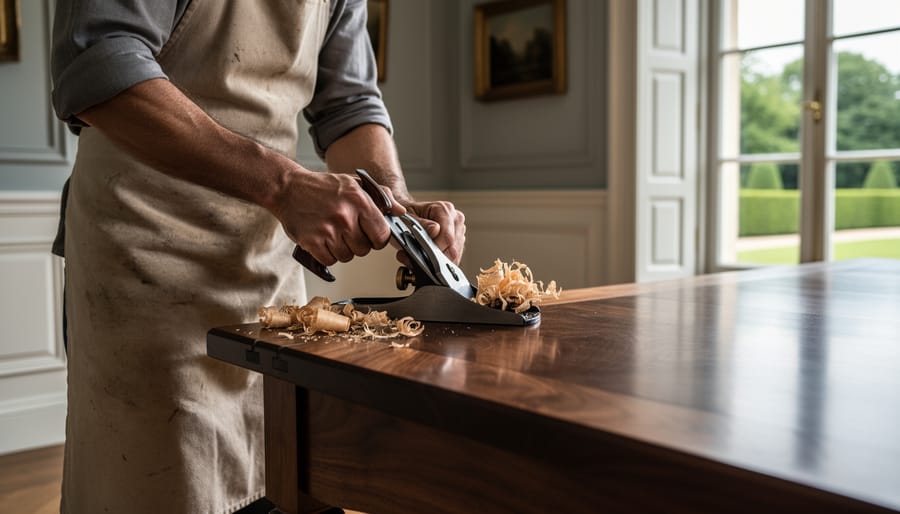
How a Craftsman Built a Table for Kensington Palace Gardens (And What It Taught Me About Furniture Making)
Nestled behind imposing security gates in London’s most exclusive street, Kensington Palace Gardens represents the pinnacle of British craftsmanship and royal heritage. When you step inside this historic location to deliver bespoke furniture, you’re not just completing a commission—you’re joining centuries of artisans who’ve shaped spaces for royalty and dignitaries.
The furniture pavilion project at Kensington Palace Gardens demanded precision that few woodworkers ever encounter. Every joint had to be flawless, every finish museum-quality, every measurement exact to the millimeter. This wasn’t furniture that would sit unnoticed in a corner; it would bear scrutiny from some of the world’s most discerning eyes, in rooms where history unfolds daily.
What makes such projects remarkable isn’t just their prestigious location, but what they teach about the craft itself. Working on royal commissions reveals truths about woodworking that apply whether you’re building a garden shed or a palace piece: quality compounds over time, shortcuts reveal themselves eventually, and true craftsmanship lies in the details no one sees but everyone feels.
This behind-the-scenes look at the Kensington Palace Gardens project reveals how traditional techniques meet modern expectations, how a single craftsperson approaches seemingly impossible standards, and most importantly, how the principles behind royal-level work can elevate your own furniture making. The gap between amateur and master isn’t talent—it’s understanding what excellence actually requires.
Kensington Palace Gardens: Where History Meets Modern Craftsmanship
The Garden Pavilion Project
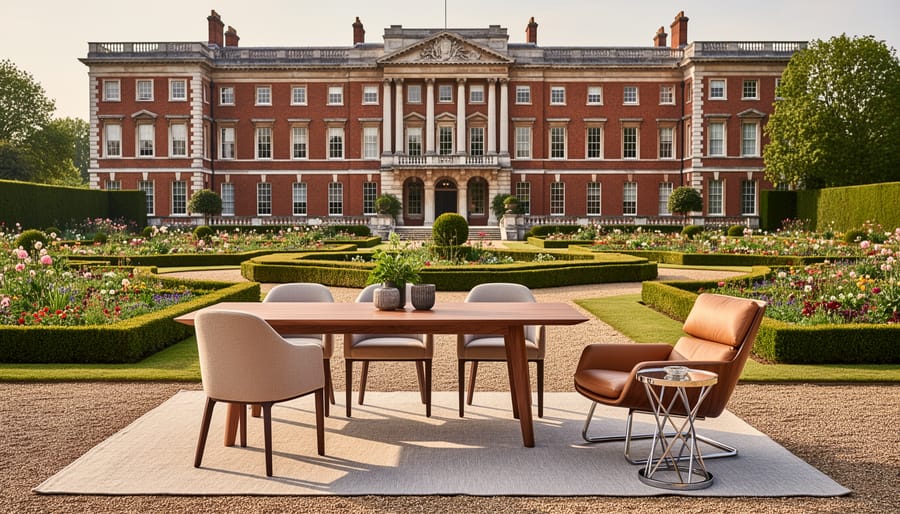
The Garden Pavilion at Kensington Palace presented a fascinating challenge that goes far beyond typical furniture making. This historic structure needed bespoke seating that would serve visitors while respecting the architectural heritage and withstanding the unique demands of a public heritage site.
Unlike residential projects where furniture lives in controlled environments, or commercial spaces with regular replacement cycles, heritage site furniture must meet extraordinarily demanding criteria. Every piece needs to complement centuries-old architecture without competing with it, endure constant public use by thousands of visitors annually, and maintain its beauty despite exposure to varying weather conditions and humidity levels. The furniture must also align with strict conservation guidelines that govern any additions to protected historic properties.
The commission called for benches that would invite visitors to pause and appreciate the palace gardens, yet remain visually understated enough to honor the setting’s historical significance. This meant considering not just aesthetics and comfort, but durability factors that residential furniture makers rarely encounter. Would the joinery withstand daily use by hundreds of people? Could the timber selection handle seasonal moisture changes in an outdoor setting? How would the finish weather over time in a location where replacement isn’t a simple option?
These questions informed every design decision, from timber species selection to joinery techniques and finish application. The project became a masterclass in thinking holistically about furniture’s entire lifecycle, considering factors like maintenance accessibility and long-term structural integrity. For any aspiring furniture maker, understanding these additional layers of complexity separates competent craftsmanship from exceptional work that stands the test of time in demanding environments. This commission demonstrated how traditional skills adapt to meet contemporary conservation requirements while honoring historical context.
Designing Furniture for a Royal Setting: The Process Behind the Pavilion Table
Material Selection and Historic Authenticity
Working on a project within the historic grounds of Kensington Palace Gardens presented unique challenges in material selection. The key was finding timber that would complement the surrounding Georgian and Victorian architecture while withstanding modern outdoor use.
We selected European oak for its historical authenticity and exceptional durability. This species has been the backbone of British craftsmanship for centuries, appearing in everything from medieval timber frames to naval shipbuilding. The oak’s natural tannins provide inherent weather resistance, making it ideal for outdoor pavilion structures exposed to London’s variable climate.
One of our advanced students, Margaret, participated in the material sourcing process and learned how quarter-sawn oak offers superior stability compared to plain-sawn cuts. This traditional milling method, though more wasteful of timber, produces boards with minimal movement as they age, a critical consideration when crafting furniture for a royal commission where longevity matters as much as beauty.
We also considered English sweet chestnut as an alternative, which historically served similar purposes to oak in British construction. However, oak’s deeper historical connection to palace architecture made it the authentic choice. The decision process taught our team an invaluable lesson: material selection isn’t merely about finding what works technically but understanding what honors the context and story of a place. This approach transforms functional furniture into pieces that truly belong in their environment.
Joinery Techniques Worthy of Palace Gardens
Creating structures worthy of palace gardens demands joinery techniques that have stood the test of centuries. For the Kensington Palace Gardens pavilion, traditional methods formed the backbone of construction, ensuring both structural integrity and timeless aesthetic appeal.
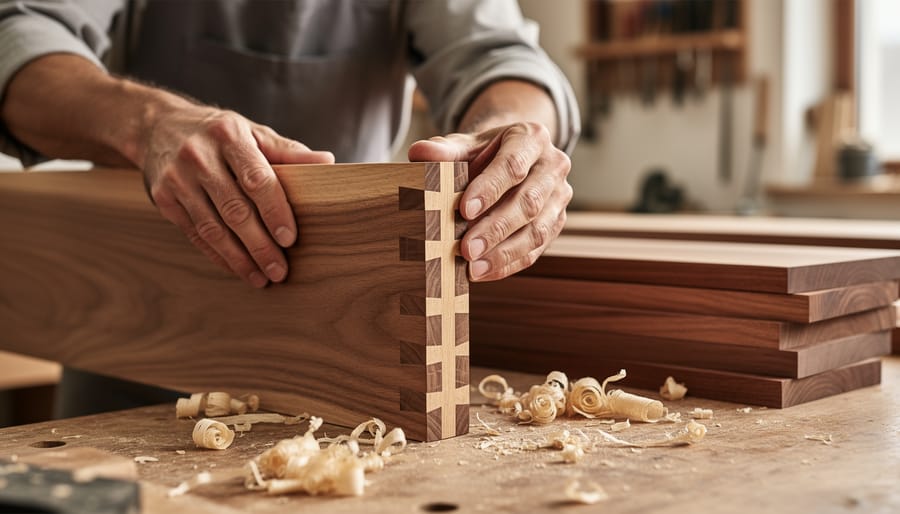
Mortise and tenon joints anchored the primary framework. This technique, dating back millennia, involves cutting a projecting tenon on one piece that fits precisely into a corresponding mortise cavity on another. The beauty lies in its simplicity and strength—when executed properly, the joint becomes stronger than the wood itself. For aspiring furniture makers, mastering this fundamental join opens doors to countless projects, from simple side tables to complex garden structures.
The pavilion also showcased through-wedged tenons at key structural points. Here, the tenon passes completely through the mortise, with hardwood wedges driven into saw cuts at the tenon’s end. As the wedges spread the tenon, they create an almost unbreakable mechanical lock. This visible joinery becomes a decorative feature, celebrating honest construction rather than hiding it.
For the roof assembly, traditional pegged joints secured the rafters. After creating mortise and tenon connections, oak dowels were driven through pre-drilled holes, pinning the joints permanently. This method requires no metal fasteners, allowing the wood to move naturally with seasonal humidity changes without compromising strength.
One former student who worked on the project shared how practicing these techniques on smaller workshop pieces built the confidence and precision needed for such a prestigious commission. The pavilion demonstrates that traditional joinery isn’t merely historical preservation—it’s a practical approach to creating furniture and structures designed to last generations, making these time-honored methods worthy investments for any serious craftsperson.
Lessons from Royal Commissions: What Every Furniture Maker Can Learn
Elevating Your Own Projects with Palace-Standard Techniques
Working on a project for Kensington Palace Gardens teaches invaluable lessons that translate beautifully to any workshop, regardless of size or budget. The principles of precision, considered design, and meticulous finishing remain constant whether you’re creating a garden pavilion for royalty or a dining table for your own home.
Start by adopting the mindset of designing for longevity. Before cutting a single piece of timber, consider how your furniture will weather time and use. This means selecting appropriate joinery methods—mortise and tenon joints for structural integrity, dovetails for drawers that will open smoothly for decades. These techniques require patience to master, but even moderately skilled woodworkers can achieve professional results with practice and proper marking out.
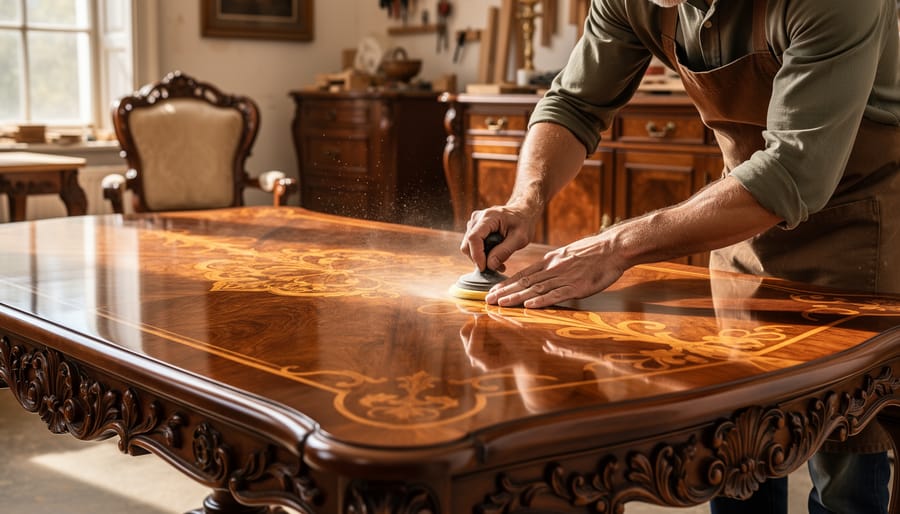
The palace project demonstrated that finishing quality separates competent work from exceptional pieces. Take time between assembly stages to sand progressively through grits, always working with the grain. Apply finishes in thin, multiple coats rather than rushing with heavy applications. One of our students, Sarah, transformed her approach after observing this principle during a workshop session. Her cherry sideboard, initially destined for heavy stain to hide inconsistencies, instead received careful surface preparation and a simple oil finish that showcased the timber’s natural beauty—exactly the philosophy applied at palace-level commissions.
Consider proportions with the same care given to historic settings. Measure your space thoroughly, create scaled drawings, and build mock-ups from inexpensive materials when tackling unfamiliar designs. This process, standard in professional workshops, prevents costly mistakes and ensures your finished piece harmonizes with its environment. The attention to detail invested in planning invariably shows in the final result, bridging the gap between amateur enthusiasm and professional execution.
Training the Next Generation: From Student Projects to Palace Commissions
Every master craftsperson begins somewhere, and the journey from first tentative chisel work to creating pieces worthy of palace gardens exemplifies what’s possible with dedicated learning and expert guidance. At Authentic Furniture UK Classes, this transformation happens regularly, as students progress from fundamental joinery techniques to undertaking their own commissioned projects.
Take Sarah Mitchell, who joined classes three years ago with no woodworking experience beyond flat-pack assembly. Her first project was a simple garden bench using traditional mortise and tenon joints. Today, she runs a successful bespoke furniture business specializing in outdoor pieces for boutique hotels. The progression wasn’t accidental. Through structured learning that emphasized both historical techniques and practical problem-solving, Sarah developed the confidence to tackle increasingly complex designs. Her breakthrough came when she completed a reproduction Lutyens bench, mastering the curved arms and precise joinery that define quality garden furniture.
Then there’s Marcus Chen, a former architect who sought hands-on skills to complement his design work. Starting with weekend workshops focused on tool sharpening and wood selection, he gradually moved into advanced courses covering proportions, finishing techniques, and weatherproofing methods essential for outdoor furniture. Within eighteen months, Marcus secured his first commission for a private garden pavilion in Surrey, applying principles learned from studying projects like the Kensington Palace installation. His client specifically requested the traditional joinery methods he’d learned, valuing the durability and authenticity they provide.
The teaching philosophy centers on demystifying complex projects by breaking them into manageable steps. Students learn that even prestigious commissions follow the same fundamental principles mastered in class: accurate measurements, sharp tools, understanding wood movement, and patient execution. This approach builds genuine competence rather than superficial familiarity.
What makes these transformations possible is the emphasis on real-world application. Rather than producing endless practice joints that end up as firewood, students create functional pieces from their earliest lessons. A simple garden stool becomes both a learning tool and a usable item, reinforcing the connection between skill development and practical outcomes. This methodology ensures that graduates leave equipped not just with techniques, but with the confidence and portfolio pieces necessary to pursue their own commissions, whether for neighbors’ gardens or more ambitious projects beyond.
The journey from admiring a prestigious project like the Kensington Palace Gardens furniture pavilion to creating your own exceptional pieces is more achievable than you might imagine. The craftspeople who contributed to this royal commission weren’t born with extraordinary abilities—they developed their skills through dedicated practice, structured learning, and guidance from experienced mentors who understood both traditional techniques and contemporary applications.
What sets apart truly remarkable furniture makers is their commitment to continuous learning and their willingness to invest time in mastering fundamental skills before advancing to complex projects. The intricate joinery, precise hand-tool work, and attention to detail visible in palace-worthy pieces stem from hundreds of hours of deliberate practice, supported by expert instruction that reveals the nuances often missed when working alone.
Today’s aspiring craftspeople have unprecedented access to the same knowledge that shapes professional furniture makers. Comprehensive courses taught by masters with hands-on experience in prestigious commissions provide the foundation you need, breaking down advanced techniques into manageable steps while maintaining the high standards that define exceptional craftsmanship.
Whether you dream of contributing to historic restorations, building bespoke pieces for discerning clients, or simply elevating your personal projects to professional quality, the path forward begins with a single decision. Explore furniture-making courses that emphasize both traditional hand skills and practical business knowledge. Start your journey today, and discover how dedication combined with expert guidance can transform your aspirations into tangible, beautiful works that stand the test of time.