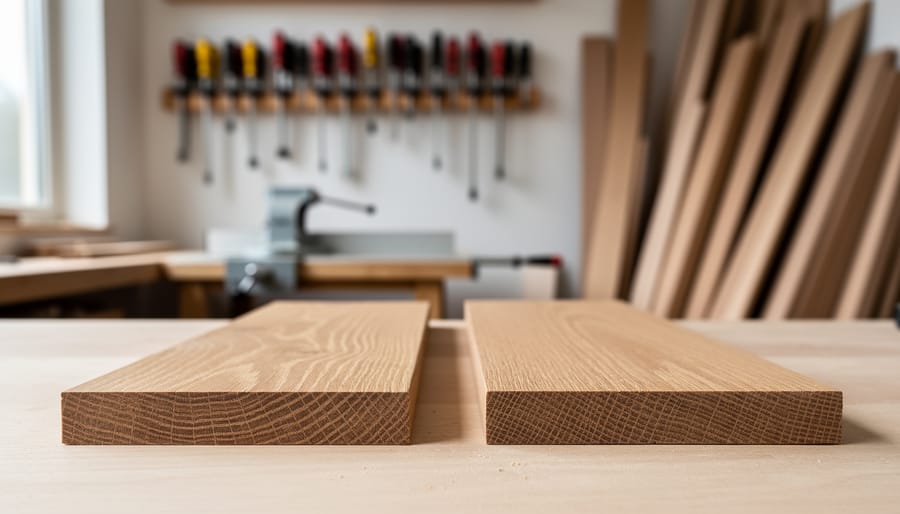
Quarter Sawn Oak vs Rift Cut: Which Is Better for Your Cabinets?
Quarter sawn oak is the better pick for most kitchen and furniture projects, mainly because it’s easier to source and usually kinder on the budget, while rift cut is the choice when you want a quiet, uniform, linear grain and can live with the supply headaches. That’s the verdict we reached after working with both cuts side by side.
Here’s why it lands that way. Rift cut oak is in such heavy demand, with so little supply, that it’s currently overpriced, and rift sawn white oak tends to turn up only through high end custom lines. White oak cut more conventionally is usually more affordable. Quarter sawn, meanwhile, gives you those striking cross-ring flecks, the shimmering ray patterns that make a cabinet door look like it has depth. Rift trades that drama for straight, restrained lines.
If you’re planning a kitchen, a dining table, or a set of built-ins, this comparison is for you. We’ll start with a quick table, explain how each cut is actually milled so the terms never feel like jargon, then weigh appearance, cost and availability one by one. By the end, you’ll know which grain suits your project and your patience for hunting down boards.
Quarter-Sawn vs. Rift-Sawn Oak at a Glance
Here is the short version before we get into the detail. Both cuts are stable, handsome choices for cabinetry, and the real difference is the look you want and what you can source at a sensible price.
| Feature | Quarter-Sawn Oak | Rift-Sawn Oak |
|---|---|---|
| Appearance | Visible cross-ring growth flecks that add character | Clean, uniform, straight lines with no flecking |
| Grain pattern | Straight grain interrupted by flecks | Consistent linear grain from edge to edge |
| Price | Usually more affordable when cut conventionally | In high demand with limited supply, currently described as overpriced |
| Availability | Easier to find through conventional cutting | Rift-sawn white oak is generally only available from a high-end custom line |
| Best-suited style | Traditional, Arts and Crafts-inspired and character-rich kitchens | Contemporary, minimalist and streamlined cabinet fronts |
On stability, I wouldn’t let it sway you. Both cuts are chosen by cabinetmakers because the growth rings sit in a more upright orientation than plain-sawn boards, so neither is a risky pick for doors and face frames.
Price and availability are where the decision usually gets practical. Rift cut is wanted by so many buyers, with so little supply to go around, that it sits at a premium right now. Quarter-sawn white oak, being cut more conventionally, tends to be the kinder option for your budget.
If you love visible character, quarter-sawn rewards you. If you want calm, linear precision, rift is the cut, provided you can source it and accept the cost.
What Each Cut Actually Is: Quarter-Sawn and Rift-Sawn Oak Explained
Quarter-Sawn Oak: The Flecked, Characterful Cut
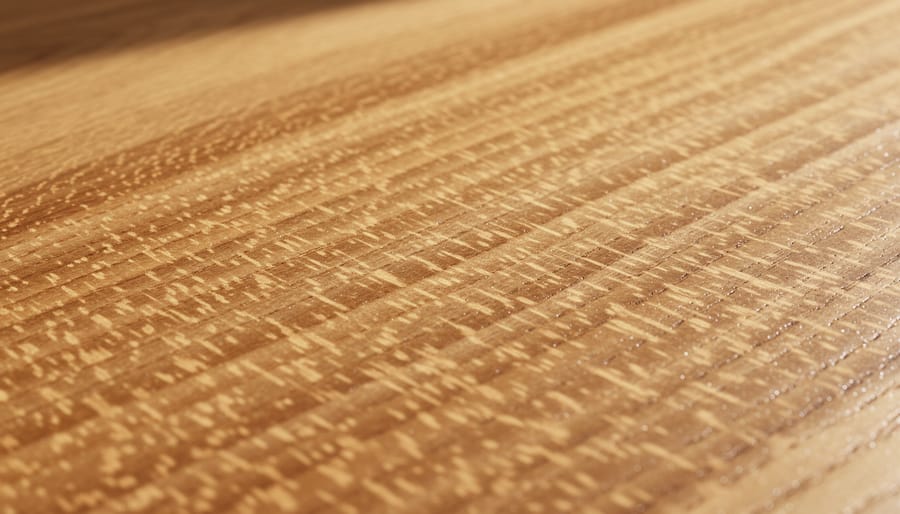
Quarter-sawn boards start with a log that’s cut into quarters lengthwise, then milled so the saw meets the growth rings at roughly right angles. That orientation is what gives the board its signature look. When the blade slices across the rings, it exposes the medullary rays, the ribbons of tissue that run out from the heart of the tree, and they show up on the face as shimmering flecks.
In oak, those flecks are striking. On a finished door panel they catch the light and shift as you move around the room, a bit like the flicker you see in a polished piece of tiger’s-eye. It’s the kind of figure you notice from across the workshop, and it’s the reason so many of my students stop mid-sentence when I hold a freshly planed board up to the window.
Here’s what to look for when you’re handling a quarter-sawn board:
- A flecked figure that breaks up the surface with lively, light-catching patches.
- Visible cross-ring growth, which adds depth you won’t find in plainer cuts.
- Straighter, tighter grain lines running between the flecks.
- A common choice for white oak cabinets where the figure really shows.
That character is exactly why the cut is prized in traditional and Arts and Crafts-inspired work. Makers in that tradition wanted the material itself to be the decoration, so rather than hiding the wood, they let the flecks do the talking. A plain, honest door in quarter-sawn oak carries all the visual interest it needs, and I find it’s one of the most rewarding cuts for beginners to learn on because the wood does so much of the work for you.
Rift-Sawn Oak: The Straight, Linear Cut
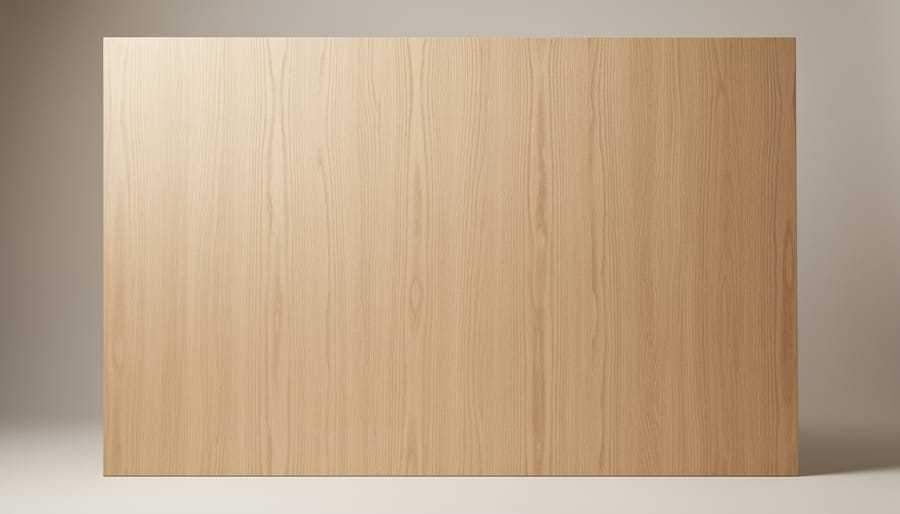
Rift-sawn boards come from cutting the log so the growth rings meet the face at roughly 30 to 60 degrees. That angle is the whole story. Where quarter-sawn cutting slices across the rays and shows those cross-ring flecks, the rift angle largely sidesteps them, so you get tight, straight lines running the full length of the board.
In our hands-on work with both cuts, that consistency is what stands out first. Lay a stack of rift-sawn rails and stiles side by side and they read as a calm, unified set. Nothing jumps out at you, and that restraint is exactly why designers reach for it when they want clean, modern cabinet fronts.
Here’s what defines the cut:
- Uniform, linear grain that runs straight from end to end
- Minimal flecking compared with quarter-sawn boards
- A contemporary, understated look that suits flat-panel doors
- Limited supply, which shapes how and where you can buy it
That last point matters in practice. Rift-sawn white oak is described as being available only from a high-end custom line, and demand currently outpaces supply. If you’re planning a kitchen around it, talk to your supplier early rather than assuming you can pick up a matching run of boards at short notice.
One tip I share with students: because the grain is so regular, small mismatches between boards become more noticeable, not less. Take your time selecting and sequencing pieces for each door, and the finished result rewards you with that crisp, linear look.
Key Terms Every Cabinetmaker Should Know
Before you order boards, it helps to speak the same language as your supplier. If you’re also weighing species, our guide to European vs American oak pairs well with this glossary.
- Plain-sawn
- The most common, conventional cut, where the log is sliced straight through and the face shows broad, cathedral-style patterns.
- Quarter-sawn
- A cut where the growth rings meet the board face at roughly right angles, which reveals the cross-ring flecks oak is known for.
- Rift-sawn
- A cut where the rings sit at roughly 30 to 60 degrees to the face, giving straight, linear grain with little or no flecking.
- Growth rings
- The yearly layers of wood you see as lines in a log, and the guide for how the sawyer orients each cut.
- Flecks (ray figure)
- The shimmering, ribbon-like marks caused by the tree’s medullary rays, most visible on quarter-sawn faces.
- Grain direction
- The way the wood fibres run along a board, which affects how it looks, planes and holds a finish.
Once these terms feel familiar, reading a lumber yard’s cut descriptions gets much easier.
Comparing the Two Cuts: Appearance, Price and Availability
Appearance: Flecks vs. Straight Lines
When you stand a finished quarter-sawn door next to a rift-sawn one, the difference is immediate. Quarter-sawn white oak carries those cross-ring growth flecks, bright, shimmering streaks that catch the light and shift as you walk past. Rift-sawn skips the flecking and gives you consistent straight lines running the full length of the board. One cut speaks up. The other settles into the background.
On doors, that contrast matters most. A big flat panel in quarter-sawn oak becomes a feature, with the figure spreading across the surface like a subtle pattern. Rift-sawn on the same panel reads calmer and more uniform, which is why designers reach for it on sleek, minimal fronts. Face frames are more forgiving. The narrow rails and stiles show less of the figure, so a quarter-sawn frame around rift-sawn panels can look intentional rather than mismatched.
Room style should guide you. Traditional, Arts and Crafts or farmhouse spaces tend to welcome the flecks. Contemporary kitchens with clean horizontal lines usually suit rift-sawn better.
I saw this play out on a sideboard we built in the workshop. The first set of doors was quarter-sawn, and the figure competed with the hardware and the room around it, so the piece felt busy. We remade the fronts in rift-sawn and kept quarter-sawn for the top. Suddenly the flecking had a single place to shine, and the whole piece felt composed rather than crowded. Same species, same finish, completely different character.
Price: Why Rift Cut Often Costs More
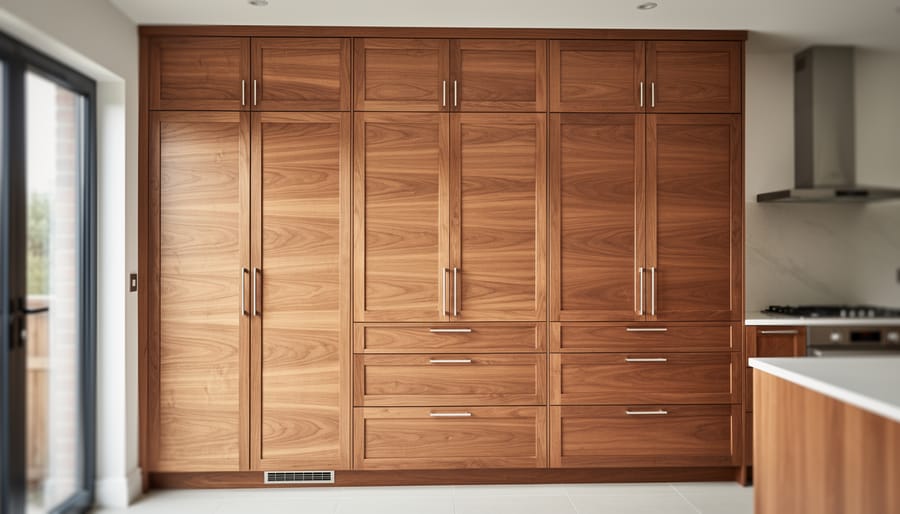
Rift cut oak is in high demand, and there simply isn’t enough supply to go around. That imbalance is why it’s currently described as wildly overpriced. White oak cut conventionally is usually the more affordable route, so the premium you pay for rift sits squarely on the shortage, not on any magic in the wood.
I tell my students the same thing I’d tell you at the bench: don’t let a price tag make the decision for you. When we compare boards side by side, both cuts finish beautifully, and quarter sawn’s cross-ring flecks give it plenty of character at the more modest end of the budget. The question is where the premium actually earns its keep.
Here’s the practical approach. Spend the money where the eye lands. Cabinet doors, drawer fronts and the face frames you’ll see every day are good candidates for rift cut if you love that clean, straight line. Interior boxes, shelving and the back of the carcass rarely need it. Using the premium cut only on the most visible parts of a build keeps the look you want without letting the whole project run away from you.
It also pays to plan early, since rift sawn white oak tends to come only from a high end custom line, and that can limit your options. If you’re weighing the cost against everything else in the build, it helps to choose construction materials with the whole piece in mind, not just the face you’ll admire most.
Availability: Sourcing Each Cut
Sourcing is where this decision often gets decided, so it pays to think about it before you fall in love with a look. Quarter-sawn white oak is cut conventionally, which is why it tends to be easier to find and usually more affordable. Rift-sawn is a different story. From what we found, rift cut oak is in heavy demand with not enough supply, and rift-sawn white oak will generally only come from a high-end custom line.
In practice, that changes how you plan a build. Start the supplier conversation early, before you’ve committed to a design or a delivery date. Ask directly whether the cut is something they stock or something they mill to order, and what the realistic wait looks like. Don’t assume a supplier can simply pull rift-sawn boards off the shelf the way they might with other stock.
If you’re a student working on a first cabinet, I’d suggest asking for sample boards in both cuts, and checking you can get enough matching material for the whole project, doors and face frames included. Grain consistency matters more with rift, since the whole appeal is those clean, straight lines. Buying everything from one batch keeps the look uniform and saves you from nasty surprises halfway through the job.
What Each Option Is
When you look at the two cuts side by side, the difference starts at the sawmill. Quarter-sawn oak is milled so the growth rings run roughly perpendicular to the face of the board. On white oak, that exposes the cross-ring growth flecks that give the surface its lively, shimmering figure. Rift-sawn oak is cut with the rings at a shallower angle, which produces tight, straight, linear grain and largely avoids the flecking.
Both cuts are popular choices for wood kitchen cabinets, and both turn up most often in conversations about white oak. Neither is a “better” board in any absolute sense. They’re simply two different ways of reading the same log, and each suits a different look.
Cutting method also shapes how a board behaves, which is why it’s worth understanding the basics of choosing materials for strength and beauty before you commit to a design.
Quarter-Sawn vs. Rift-Sawn Oak: Advantages and Drawbacks
Both cuts earn their place in a cabinet shop, and the honest answer is that each trades something for what it gives you. Here’s how they stack up when I put them side by side.
Quarter-sawn oak: pros
- Cross-ring growth flecks give the surface a lively, characterful appearance.
- It sits comfortably in traditional and Arts and Crafts-inspired cabinetry.
- White oak cut more conventionally is usually more affordable.
- It is a familiar option for wood kitchen cabinets.
Quarter-sawn oak: cons
- The flecking can feel busy for very minimal, contemporary designs.
- Fleck patterns vary from board to board, so matching takes care.
- The strong figure may not suit every room.
Rift-sawn oak: pros
- Straight, linear grain gives a clean, calm face.
- It suits modern cabinet fronts and streamlined styles.
- The consistent look reads as refined across large door runs.
Rift-sawn oak: cons
- Demand is high and supply is limited, so it is currently overpriced.
- Rift-sawn white oak will only be available from a high-end custom line.
- Sourcing usually means longer planning and supplier conversations.
Notice that appearance is the real fork in the road, while price and availability are the practical constraints. A maker who loves visible character and wants an easier buying experience will lean quarter-sawn. Someone chasing a quiet, linear look may happily accept the cost and lead time of rift-sawn. Neither choice is wrong, and both can produce beautiful, well-made work.
Which Cut Should You Choose? Matching Oak to Your Project
The honest way to choose is to ask three questions: what look do you want, what can you spend, and how comfortable are you with sourcing and milling? Your answers usually point clearly one way.
- Choose quarter-sawn if you want visible, flecked character that enhances the face of the door.
- Choose rift-sawn if you want a clean, linear look and have both the budget and a supplier who can deliver it.
- Consider conventionally cut white oak if cost is your priority and you can live with a less uniform grain.
Budget deserves a straight conversation. Rift cut oak is in high demand with limited supply, and it’s currently overpriced, while white oak cut conventionally is usually more affordable. Rift-sawn white oak may also only come from a high-end custom line, so you may be waiting on a supplier rather than simply picking up boards.
One of my students, who I’ll call Priya, was building her first kitchen cabinet and was torn between the two. She loved the clean lines of rift-sawn oak, but after talking through supply and cost, she went with quarter-sawn. When she planed her first board and the flecks appeared under the blade, she was hooked. She told me the figure forgave small imperfections in her joinery far better than she’d expected, which gave her confidence on a first build.
That’s the reassurance I give every beginner: neither choice is a mistake. Both are stable, beautiful cuts, and well-made cabinetry in either will look wonderful. Pick the one that matches your eye and your budget, then put your energy into careful milling and clean joints.
Key Takeaway: Choosing Between Quarter-Sawn and Rift-Sawn Oak
Quarter-Sawn vs. Rift-Sawn Oak: Frequently Asked Questions
What is the difference between quarter-sawn and rift-sawn oak?
Both are stable cuts, but they look different. Quarter-sawn shows the cross-ring growth flecks that enhance its character, while rift-sawn runs in straight, linear lines without that flecking.
Why is rift-sawn oak so expensive?
Demand is high and supply is limited, which currently makes it wildly overpriced. Rift-sawn white oak is also only available from a high-end custom line, so there are fewer places to buy it. White oak cut more conventionally is usually more affordable.
Can you mix both cuts in one kitchen?
Yes, many makers do. A practical approach is to put the premium cut on the most visible parts of the build and the more affordable cut elsewhere, keeping the finish consistent across both.
Which looks better for modern cabinets?
Rift-sawn is the usual choice for a clean, contemporary look because its grain stays straight and uniform. Quarter-sawn suits spaces where you want visible flecks and a more traditional feel.
Still unsure which way to lean? Our best advice is to hold a sample of each in good light before you commit, because photographs flatten the very details that separate these two cuts.

Whichever cut you choose, you’re working with a beautiful, stable material, and that’s worth remembering. Quarter-sawn gives you those flecked, characterful boards; rift-sawn gives you clean, linear lines. Neither is wrong, and price and availability may well make the decision for you.
My best advice is to handle sample boards before you commit. Hold them in daylight, run a finger along the grain, and picture them as doors in your own room. That small step builds real confidence.
If you’d like to go further, my furniture-making courses and bespoke services are here to help you work with oak like a craftsperson.